-
Launching soon: Trade Union Project
We are excited to soon be publicly releasing our Pathways to Power and Justice publication, the result of a one-year Participatory Action Research (PAR) project in collaboration with cohorts from eight trade unions (from senior role holders to rank-and-file activists).
This project has attempted to address key roadblocks to building long-lasting worker power, bringing participants together six times across the past year to collectively reflect on experiences working and organising in their unions; generating knowledge through practice (from cadre-building strategies to technical methods like systems mapping); and using this to plan a set of live actions and interventions. This project has made possible something rarely afforded in union contexts: sustained time and space to collectively analyse our working culture and conditions.
The publication will be released in May 2026, with a launch event happening in Summer – watch this space!
Standing up to the Far Right
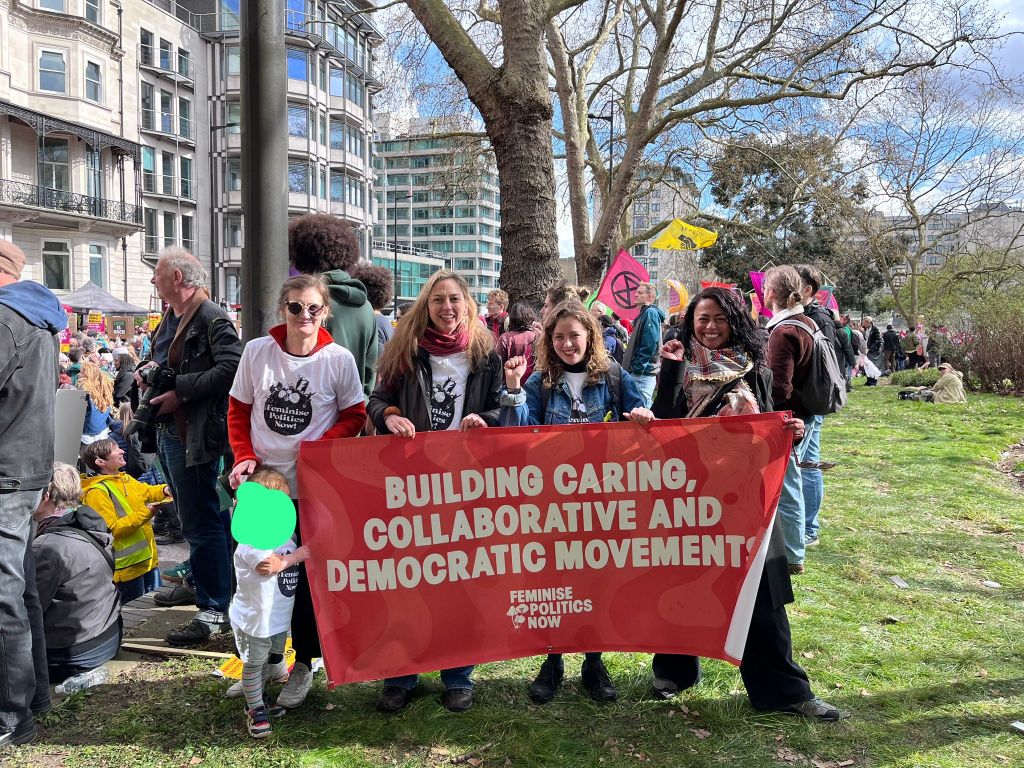
We were honoured to join over half a million people at the Together March on 28th March 2026. With the growing fascist threat, marginalised groups – as well as progressive organisations and unions – are becoming more of a target.
Our work seeks to rebuild movements of working class leaders in all their diversity, able to tackle the crises we face. This means standing with anyone becoming a target of fascism. No one is safe until everyone is safe.
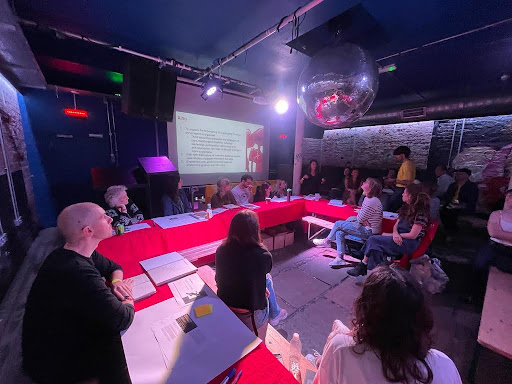
We are excited to be embarking on a critical piece of methodological research examining how organisations can develop longer term strategies for tackling the urgent crises we face, including the growing threat of the far right. This work will be deliberately generative and tied to an on-the-ground organising strategy, delivered through a two-year programme of ‘movement meals’ for target groups leading resistance on the ground (for example those organising renters and workers, or organising migrant and international solidarity). We will provide critical reflection space away from the exhaustion of day-to-day of frontline work.
The meals and accompanying research programme will consist of evening and half-day facilitated workshops held across two years. The meals will include a mixture of structured reflection and ‘check-ins’, where participants can share challenges and dilemmas they are facing — something that we think few explicitly political organisations are currently able to offer. Alongside these meals will be a programme of research, using participatory action research (PAR) as both a political commitment and a practical way of working.
Are you interested in this? Get in contact!
Launching our booklet at The World Transformed 2023!
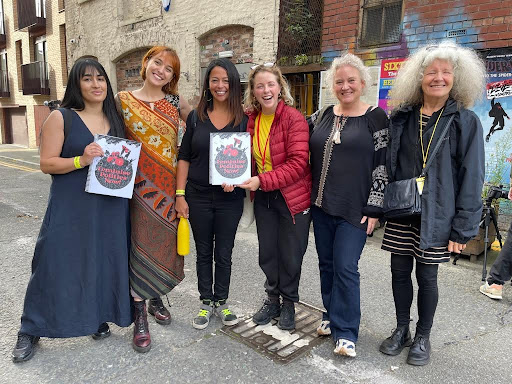
In Liverpool in October 2023 at The World Transformed, a festival of radical politics, art and music we ran a workshop, launching our very own booklet full of case studies of the organisations we have worked with!
How we used the booklet
We used the booklet extensively in the workshop, and based it around the use of it as a practical resource. We gave an introduction to how the resource came about about, and the intention of the workshop – to explore the importance of challenging the ways we’ve learnt to organise and responding using principles and strategies of care, collaboration/coalition, (shared) leadership, participation, democracy and anti-oppression can help us become stronger more sustainable groups. Each of the chapter writers gave some insight into why they wrote it and the groups that they reached out to spotlight in the case studies section.
Reflecting on the group work
The focus of the workshop was practical, so after we orientated ourselves to the values of the network we quickly turned to group work. We gave prompts for people to engage with the themes in relation to their organisations and groups. Each group took a different approach to this. The group analysing the chapter on Care did a close reading of the case study, pulling out the themes of rotational care roles in groups, and how to go about implementing these practises in different contexts from Students Unions to trade union organising. The group focusing on Collaboration talked more exclusively about municipal housing projects and the dynamics of navigating this as long term tenants, housing officers and local councillors elected for a four year term. The question of how to work in coalition from different positions relating to these projects was pulled apart. They discussed the complexities of working across different timelines, from election cycles, to entrenched council workers’ ways of working, and the urgency of tenants’ cost of living increasing currently. The group explored the different roles in coalitions to push for more affordable housing, and less luxury developments in their local areas.
-
Launching soon: Trade Union Project
We are excited to soon be publicly releasing our Pathways to Power and Justice publication, the result of a one-year Participatory Action Research (PAR) project in collaboration with cohorts from eight trade unions (from senior role holders to rank-and-file activists).
This project has attempted to address key roadblocks to building long-lasting worker power, bringing participants together six times across the past year to collectively reflect on experiences working and organising in their unions; generating knowledge through practice (from cadre-building strategies to technical methods like systems mapping); and using this to plan a set of live actions and interventions. This project has made possible something rarely afforded in union contexts: sustained time and space to collectively analyse our working culture and conditions.
The publication will be released in May 2026, with a launch event happening in Summer – watch this space!
Standing up to the Far Right
We were honoured to join over half a million people at the Together March on 28th March 2026. With the growing fascist threat, marginalised groups – as well as progressive organisations and unions – are becoming more of a target.
Our work seeks to rebuild movements of working class leaders in all their diversity, able to tackle the crises we face. This means standing with anyone becoming a target of fascism. No one is safe until everyone is safe.
We are excited to be embarking on a critical piece of methodological research examining how organisations can develop longer term strategies for tackling the urgent crises we face, including the growing threat of the far right. This work will be deliberately generative and tied to an on-the-ground organising strategy, delivered through a two-year programme of ‘movement meals’ for target groups leading resistance on the ground (for example those organising renters and workers, or organising migrant and international solidarity). We will provide critical reflection space away from the exhaustion of day-to-day of frontline work.
The meals and accompanying research programme will consist of evening and half-day facilitated workshops held across two years. The meals will include a mixture of structured reflection and ‘check-ins’, where participants can share challenges and dilemmas they are facing — something that we think few explicitly political organisations are currently able to offer. Alongside these meals will be a programme of research, using participatory action research (PAR) as both a political commitment and a practical way of working.
Are you interested in this? Get in contact!
Launching our booklet at The World Transformed 2023!
In Liverpool in October 2023 at The World Transformed, a festival of radical politics, art and music we ran a workshop, launching our very own booklet full of case studies of the organisations we have worked with!
How we used the booklet
We used the booklet extensively in the workshop, and based it around the use of it as a practical resource. We gave an introduction to how the resource came about about, and the intention of the workshop – to explore the importance of challenging the ways we’ve learnt to organise and responding using principles and strategies of care, collaboration/coalition, (shared) leadership, participation, democracy and anti-oppression can help us become stronger more sustainable groups. Each of the chapter writers gave some insight into why they wrote it and the groups that they reached out to spotlight in the case studies section.
Reflecting on the group work
The focus of the workshop was practical, so after we orientated ourselves to the values of the network we quickly turned to group work. We gave prompts for people to engage with the themes in relation to their organisations and groups. Each group took a different approach to this. The group analysing the chapter on Care did a close reading of the case study, pulling out the themes of rotational care roles in groups, and how to go about implementing these practises in different contexts from Students Unions to trade union organising. The group focusing on Collaboration talked more exclusively about municipal housing projects and the dynamics of navigating this as long term tenants, housing officers and local councillors elected for a four year term. The question of how to work in coalition from different positions relating to these projects was pulled apart. They discussed the complexities of working across different timelines, from election cycles, to entrenched council workers’ ways of working, and the urgency of tenants’ cost of living increasing currently. The group explored the different roles in coalitions to push for more affordable housing, and less luxury developments in their local areas.
Hear the latest from Feminise Politics Now!
Find us on:
Join the network!
Join the network to receive updates from Feminise Politics Now! and get involved in our programmes and upcoming opportunities…
 Feminise Politics Now!