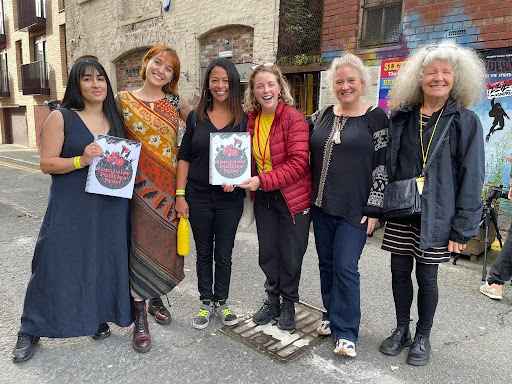
In Liverpool in October 2023 at The World Transformed, a festival of radical politics, art and music we ran a workshop, launching our very own booklet full of case studies of the organisations we have worked with!
How we used the booklet
We used the booklet extensively in the workshop, and based it around the use of it as a practical resource. We gave an introduction to how the resource came about about, and the intention of the workshop – to explore the importance of challenging the ways we’ve learnt to organise and responding using principles and strategies of care, collaboration/coalition, (shared) leadership, participation, democracy and anti-oppression can help us become stronger more sustainable groups. Each of the chapter writers gave some insight into why they wrote it and the groups that they reached out to spotlight in the case studies section.
Reflecting on the group work
The focus of the workshop was very practical, so after we orientated ourselves to the values of the network we quickly turned to group work. We gave prompts for people to engage with the themes in relation to their organisations and groups. Each group took a different approach to this. The group analysing the chapter on Care did a close reading of the case study, pulling out the themes of rotational care roles in groups, and how to go about implementing these practises in different contexts from Students Unions to trade union organising. The group focusing on Collaboration talked more exclusively about municipal housing projects and the dynamics of navigating this as long term tenants, housing officers and local councillors elected for a four year term. The question of how to work in coalition from different positions relating to these projects was pulled apart. They discussed the complexities of working across different timelines, from election cycles, to entrenched council workers’ ways of working, and the urgency of tenants’ cost of living increasing currently. The group explored the different roles in coalitions to push for more affordable housing, and less luxury developments in their local areas.
Always working with accessibility in mind
To make the workshop accessible and exciting we put effort into designing the space to be as open to participation and discussion as possible. The tables were arranged in a square with benches either side for people to be face to face with one another. We had red table clothes to give the room some colour and make it an inviting and colourful space. Each of the tables had copies of the publication alongside printed out questions for each group to support the various chapter discussions.
People were encouraged to bring in their own organising experience when engaging with the chapters. We had one person chosen from each group to feedback to the whole group at the end, this was a great chance to hear back from all the different groups’ discussions.
Interested in getting involved? email feminisepoliticsnow@gmail.com
 Feminise Politics Now!
Leave a comment